
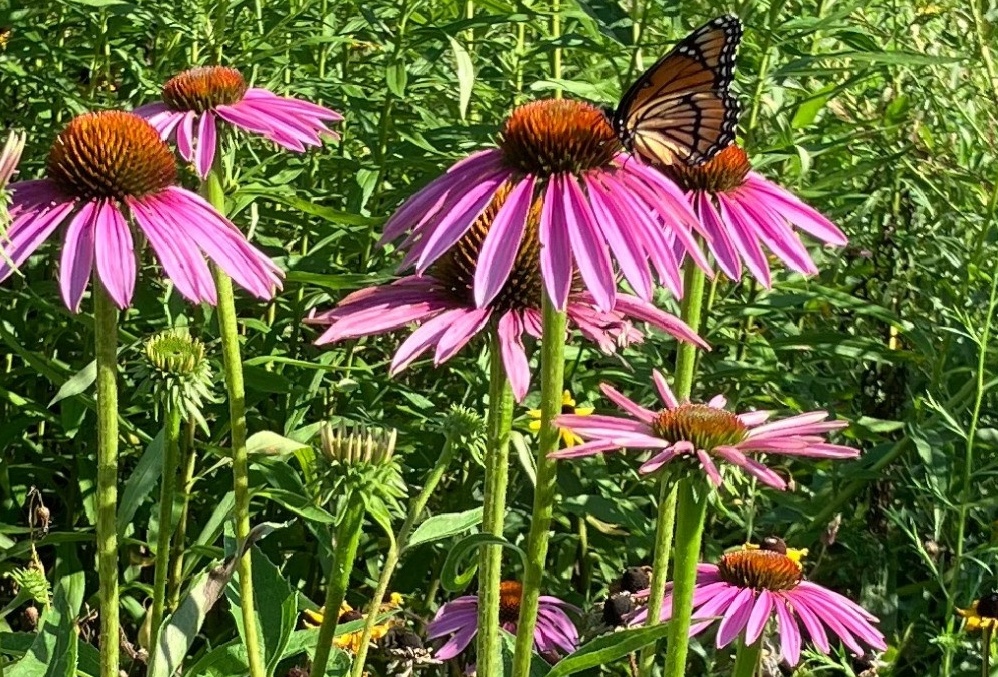
The Demeter Farm Standards place the enhancement of biodiversity on the farm at the forefront of the requirements for Biodynamic certification: “A Demeter certified farm must have a minimum of 10% of its total effective land base — clearly documented in a calculated acreage figure — set aside as a biodiversity reserve. This preserves wildlife diversity, endangered species habitat, and provides an overall reserve of diverse life forms to inoculate and inhabit the farm organism.”
Treating the farm like an organism functioning as a whole, or an ecosystem with interrelating parts, emphasizes the importance of a diversity of plants, insects, and animals to create the complexity of relationships that support resiliency.
An October 2024 article titled “The Role of Biodiversity in Agricultural Resilience: Protecting Ecosystem Services for Sustainable Food Production”, published in the International Journal of Research Publication and Review, focuses on the benefit to farms and communities of incorporating biodiversity into farm management goals.
The authors note that high biodiversity levels confer many benefits within an agricultural system, including efficient crop pollination due to abundant populations of pollinator species, effective nutrient cycling, better water retention, and enhanced fertility due to rich populations of microorganisms in the soil, and resiliency in facing environmental challenges such as climate events, pests, and diseases. These and a number of other benefits are often described as Ecosystem Services, as they can aid the wider community through flood control, pest suppression, water quality improvements, carbon sequestration, habitat provision, and more.
Biodynamic farmers and others striving toward sustainability have shown us that it is possible to integrate a farm into an ecological landscape, with attention and observation given to how natural features and perennial and annual plantings can best serve this goal. The article notes that conversely, conventional agriculture is one of the largest threats to biodiversity on the planet. Monocropping, intensive use of fertilizer and other chemical inputs, soil compaction, and energy use can all contribute to species losses and ecological damage.
The paper touches on incentives and motivations that currently exist to encourage farmers to “implement practices that enhance biodiversity, such as cover cropping, agroforestry, and organic farming.” The USDA’s program Environmental Quality Incentives Program (EQIP) is cited as an example, in addition to private sector initiatives and certification programs.
Biodynamic certification, though not widely recognized, is the original program to promote biodiversity as a key pillar of sustainable and regenerative farming practices. More research continues to be published and recognition given to the role that biodiverse ecosystems play on farms, across the wider landscape, in communities, and globally. There is opportunity for Biodynamic practitioners to highlight this abundant evidence of the beneficial role of biodiverse Biodynamic farms and Demeter certification.
“Since nature has the most sustainable ecosystem and since ultimately agriculture comes out of nature, our standard for a sustainable world should be nature’s own ecosystem.” — Wes Jackson, Founder of The Land Institute